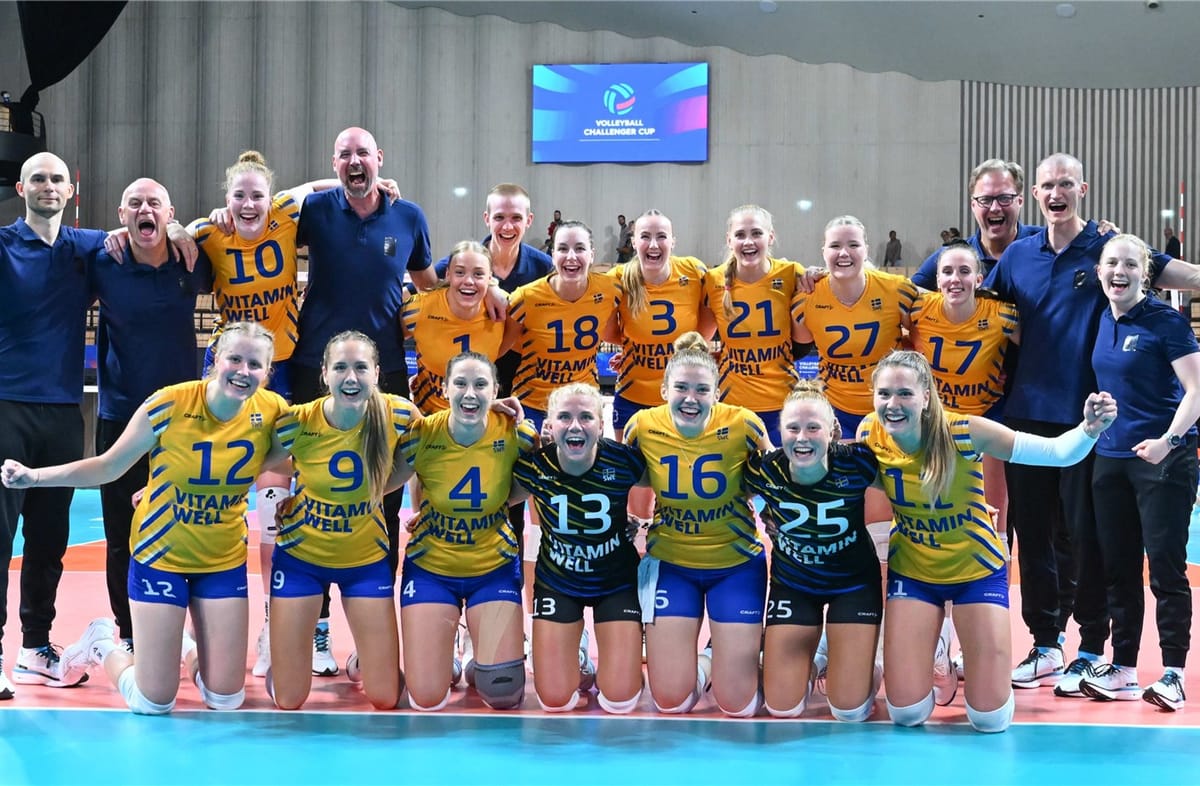
The renaissance of the Sweden women’s national volleyball team continues to be felt in various international competitions thanks to the revolutionary FIVB Volleyball Empowerment programme.
The FIVB has invested a total of CHF 18,000 for coach support in Sweden since 2020, with Finnish coach Lauri Hakala taking charge of the women’s national team in 2022. Meanwhile, an additional CHF 72,000 has already been approved for coach support in 2024-2025.
The team has achieved remarkable feats in 2023, reaching the final of the FIVB Volleyball Challenger Cup in July and making it to the Round of 16 in the CEV EuroVolley Women in August.
The ripple effect of the team’s improved performances on the court has been palpable in Sweden with the popularity of the sport rising to dizzying heights with fans.
According to Swedish Volleyball Association (SVA) General Secretary Simon Dahl, sports lovers in Sweden have now started following the women’s team religiously due to increased volleyball coverage by local media stations.
“You have to go back 30 years when we enjoyed some good coverage by the media when we had a very good men’s team. The emergence of Isabelle Haak four years ago made local media start following volleyball but when we reached the quarterfinals of the EuroVolley in 2021, the interest went a notch higher,” revealed Dahl.

Sweden’s star opposite Isabelle Haak is a fan favourite back home
“With the team now supported by the FIVB Volleyball Empowerment programme, fans from different sports have begun following volleyball keenly and watching our matches. They know the rules of the game and even the individual players. Volleyball is now one of the best TV sports since they find it really engaging,” said Dahl, who also added that the success of the men’s beach volleyball team of David Ahman and Jonatan Hellvig has also played a significant role.
The younger generation has also taken to the sport and Dahl says the SVA is taking several initiatives and actions with the aim to take advantage of the growing interest in the sport.
“A lot of young people are beginning to take up the sport and we are looking at several options on how to handle the influx in the best way possible. Some of our local clubs are having a challenge in training space due to limited infrastructure amid the rising numbers,” said Dahl.
Source : fivb.com
Cet article est repris de son site d'origine, où vous trouverez la version complète.
Lire l'article sur fivb.com